
Dry Ridge System Installation Dublin
Wind resistance & long-term durability
Tidy mechanical finish — no mortar cracks
Clear written quote before work starts
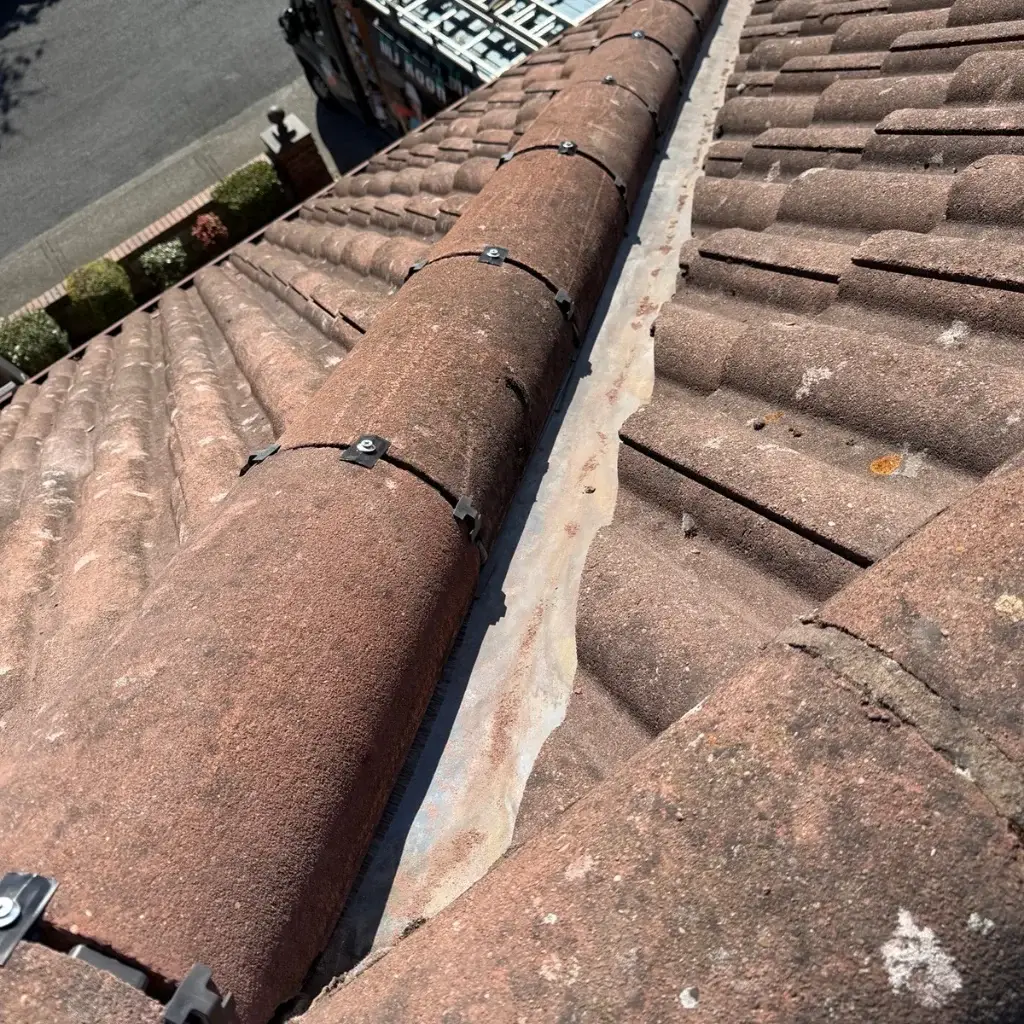
What Is a Dry Ridge System?
Repair options depend on the roof type and the extent of damage. For minor issues — a small split, a few loose tiles, or debris blockage — we can often carry out a targeted repair without disturbing the entire valley. For more significant problems — corroded lining, widespread tile damage, or poor original detailing — we may recommend section replacement or valley renewal.
EXCELLENTTrustindex verifies that the original source of the review is Google. I had a great experience with Marcin for my roof repair. He was professional, reliable and easy to deal with from start to finish. He inspected the roof properly, explained the issue clearly and carried out the repair work neatly and efficiently. The service felt honest and trustworthy, and the area was left clean afterwards. I would happily recommend Marcin to anyone looking for roof repairs, leak repairs, roof maintenance or general roofing work.Posted on GoogleTrustindex verifies that the original source of the review is Google. Dreadful experience, work completed to very poor standard. Workers not supplied with adequate materials.Posted on GoogleTrustindex verifies that the original source of the review is Google. Excellent experience working with MJ roofing. Professional, approachable and always quick to respond. Highly recommend.Posted on GoogleTrustindex verifies that the original source of the review is Google. We were lucky enough to reach Martin to help with a roof assessment of a home we're hoping to purchase. He was extremely fast and communicative, arranging the inspection the same week. His team arrived on time, produced the report and quotation later that day, and were available for a call to discuss the details. Incredible service, couldn't recommend them more!Posted on GoogleTrustindex verifies that the original source of the review is Google. We had a roof leakage issue and MJ Roofing and More were absolutely fantastic from start to finish. Mercin and the whole team were professional, responsive, and very reassuring during what could have been a stressful situation. They quickly identified the root cause of the leak, explained everything clearly, and fixed it efficiently with great attention to detail. The work was done to a very high standard and the area was left clean and tidy afterwards. We’re extremely happy with the service and would highly recommend MJ Roofing and More to anyone needing roofing repairs or maintenance. Thank you again!Posted on GoogleTrustindex verifies that the original source of the review is Google. They are professional roofers. Excellent service, work, tidiness. Extra, unplanned work done without any delays. I can only recommend them.Posted on GoogleTrustindex verifies that the original source of the review is Google. This was our second time to use MJ Roofing and once again we were very happy with their work. We had to have our extension roof replaced due to bad workmanship by a builder. We knew from previous experience that MJ Roofing could be trusted and we now have a warm, dry and well insulated roof. Marcin and his crew, in particular, Leszek and Jarek, were a pleasure to deal with. We would highly recommend MJ Roofing.Posted on GoogleTrustindex verifies that the original source of the review is Google. Great quality work by Marcin and his team. They were extremely professional and the work was completed on time and to a very high standard. Update April 2025 - we’ve just had the team out again to do another job and once again their work was excellent. I would highly recommend them to anyone.Posted on GoogleTrustindex verifies that the original source of the review is Google. Initially I had a badly leaking porch to deal with. Water was pouring down the inside of the walls. Marcin was there quickly to inspect and once work was started it was done in no time. Photos were taken of the roof to show what was wrong and what would be done. I wouldn’t hesitate to work with this business again. Update: I got Marcin and his team back to do some more work in 2025 and again I can’t recommend them highly enough. Efficient and professional and very helpful.Posted on GoogleTrustindex verifies that the original source of the review is Google. Martin and team were extremely easy to deal with. They arrive on time are very knowledgeable and keep you informed as they work. Very professional in every aspect of the job. I especially liked how Martin would update if any extra work was required before proceeding so you know exactly where you stand at all times. I’d highly recommend Martin and his team.Verified by TrustindexTrustindex verified badge is the Universal Symbol of Trust. Only the greatest companies can get the verified badge who has a review score above 4.5, based on customer reviews over the past 12 months. Read more
Benefits of Dry Ridge vs Mortar Ridge
Dry Ridge System
- No mortar cracking or deterioration
- Mechanical fixings resist wind uplift
- Built-in ventilation helps reduce condensation
- Low maintenance — no repointing required
- Consistent performance over time
- Keeps out rain, snow, and birds
- Suitable for most tile and slate roofs
Traditional Mortar Ridge
- Mortar cracks over time due to thermal movement
- Requires repointing every 15–25 years
- Ridge tiles can loosen in high winds
- Ongoing maintenance costs
- Water ingress where mortar fails
- Birds can nest under loose mortar
- Limited ventilation unless separately installed
When You Should Consider Dry Ridge
What's Included
Inspection & Assessment
Survey existing ridge and advise on best approach.
Removal & Prep
Remove old mortar and ridge tiles where applicable.
Ridge Line Ventilation
Ventilation components installed where required.
Secure Fixings
Mechanical brackets and clips fitted to specification.
End Caps & Finishing
Ridge ends and unions properly sealed and finished.
Tidy Finish
Site cleaned and old materials removed.
Photos on Request
Before, during, and after photos provided.
Our Installation Process
Survey & Advise
We inspect your existing ridge, assess the roof structure, and explain whether dry ridge is suitable. Photos taken for reference. All options discussed clearly.
Fixed Quote
You receive a clear written quote with full scope of work, materials specified, and timeline estimates. No hidden costs or surprises.
Installation & Clean Finish
Work is carried out with proper safety measures and quality materials. Site is cleaned, waste removed, and ridge inspected before handover.
Loose Ridge Tiles or Cracking Mortar?
Recent Dry Ridge Upgrades
Dry Ridge Installation — North Dublin

Ridge Upgrade — South Dublin
Dry Ridge Repair — West Dublin
Service Areas
Areas We Cover
We provide dry ridge system installation across Dublin and surrounding areas, including Dublin City, North Dublin, South Dublin, Swords, Malahide, Portmarnock, Lucan, Tallaght, Dundrum, Blackrock and nearby areas.
Not listed? Call us — we likely cover your area.
Frequently Asked Questions
Is dry ridge better than mortar?
Does dry ridge help in high winds?
Can you fit dry ridge on existing roofs?
Do you replace broken ridge tiles at the same time?
How long does installation usually take?
Do you provide written quotes and photos?
Are you insured for dry ridge installation work?
Should I also consider dry verge at the same time?
If your roof has gable ends (the triangular sections at the sides of the house), then yes — dry verge is worth considering, especially if you’re already upgrading the ridge. Dry verge systems provide a low-maintenance finish for roof edges and help prevent wind uplift and water ingress at the verge. Like dry ridge, dry verge uses mechanical fixings rather than mortar, eliminating cracking and maintenance issues. If you’re planning a re-roof or ridge replacement, it often makes sense to upgrade both the ridge and verge systems at the same time for consistency and long-term performance. We can assess your verge during the ridge survey and provide a combined quote if you’re interested. See our dry verge installation page for more details.